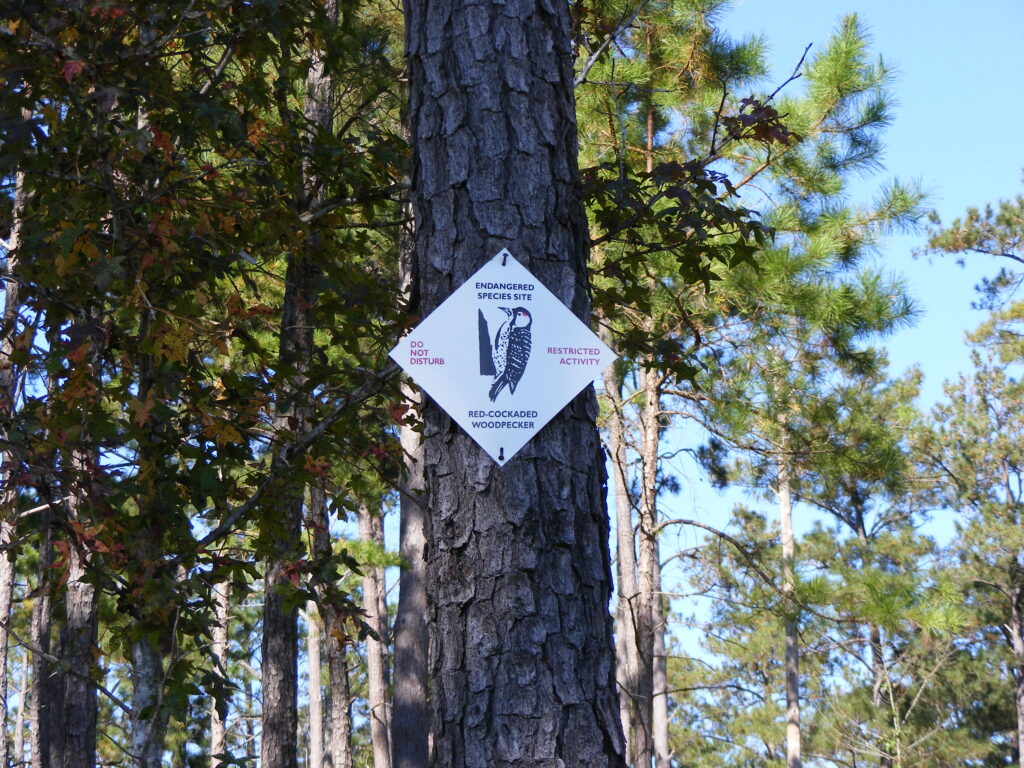
Auburn’s newly approved Environmental Law graduate certificate program will prepare natural resource professionals and others working in environmental fields with knowledge about various environmental policies and laws, such as the Endangered Species Act.
The Auburn University College of Forestry, Wildlife and Environment (CFWE) has expanded its online graduate program offerings with the addition of the newly created Environmental Law Certificate. Approved by Auburn University’s Board of Trustees last November, the program will prepare natural resource professionals and others working in environmental fields with knowledge about various environmental policies and laws.
Geared for working professionals, the certificate is designed to advance the level of knowledge and skills for individuals interested in issues related to current laws governing environmental protection, natural resource management, sustainable development and land-use planning.
Issues of environmental law permeate virtually every aspect of the state and national economy, and the ongoing evolution of this field requires that professionals working with natural resources possess not only knowledge of environmental law and regulation but also an understanding of the policies and processes that underpin it.
From the operation of traditional industries, such as agriculture, mining and forestry, to newer developments in renewable energy, AI and data centers, all must deal with issues of environmental law. Thus, the value of leaders, managers and employees versed in that field of study provides abundant opportunity that, to date, has not been widely available at the graduate certificate level.
As one of the nation’s most biodiverse states, the creation of this certificate at a major university in Alabama is no coincidence. Auburn graduates with a working knowledge of environmental laws, such as the Clean Water Act and the Endangered Species Act, will be sought after by various industries, agencies and non-governmental organizations to help them understand and ensure compliance with environmental policies and regulations.
The program will benefit the state and beyond by increasing the number of professionals and public servants who have a thorough understanding of environmental laws, including their requirements, the processes by which they are enacted and the mechanisms for their enforcement. For example, industry professionals will gain an increased understanding of environmental permitting processes and obligations, which will enhance their ability to successfully (and properly) locate, adapt, or expand their business enterprise.
“While it is expected these professionals will already possess undergraduate degrees pertinent to their fields, a graduate certificate in Environmental Law will provide them with a body of knowledge increasingly necessary for their current successful functioning, and I suspect, their ultimate personal advancement,” said Jim Noles, attorney and professor of practice in the CFWE.
Designed to be flexible, students must complete 15 credit hours to earn the graduate certificate. This includes six credit hours of core electives focused on environmental and property law and nine credit hours of concentration electives, including Environmental Ethics, Coastal Law, Energy Law, Natural Resource Policy and Conflict and Collaboration in Natural Resource Management.
The curriculum will equip individuals working in fields such as land management, construction and natural resources management or conservation with specialized knowledge and skills that can enhance their performance and potentially advance their careers.
“Importantly, the certificate is not intended to train individuals to practice law; rather, it is designed to educate individuals about the laws,” said Adam Maggard, associate dean of academic in the CFWE. “With this credential, graduates will have enhanced their ability to comply with environmental laws, improved their understanding of when consultation with an attorney is necessary and how to communicate about legal issues related to the environment and natural resources.”
For more information, visit cfwe.auburn.edu. For guidance regarding curriculum choices, admissions policies and deadlines, contact Jessica Daniel at jrd0084@auburn.edu or (334) 844-1077.