Dr. Christopher Anderson, center, is shown with undergraduate research student Brianna Travis and doctoral student Andrew Balder while conducting field research in the Mobile-Tensaw River Delta at Lake Creola, Alabama.
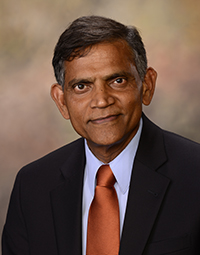
Christopher Anderson, the Charles D. McCrary Professor in Natural Resources Conservation and Development at Auburn University, was recently named the recipient of the Sessions-Brown Conservation Leadership Award, presented by the Dauphin Island Sea Lab Foundation in recognition of his research impacting the southern Alabama Mobile-Tensaw River Delta (MTRD).
Bestowed annually, the award recognizes individuals from across Alabama whose work has advanced conservation through research, leadership and practical application while balancing the state’s economic, cultural and historical interests. It was established in 2023 in honor of Alabama Sen. David Sessions and Rep. Chip Brown for their advocacy of land and water conservation throughout the Mobile-Tensaw River Delta and Alabama watershed.
Considered widely to be “America’s Amazon,” the MTRD is the second largest delta in the contiguous United States and is home to a vast array of aquatic life, plants, trees and ecosystems. Dr. Anderson’s Wetland and Riparian Ecology Lab, housed in the College of Forestry, Wildlife and Environment (CFWE), is dedicated to studying how changes in hydrology and surrounding land use impact wetland function, with the MTRD serving as an important field site.
“I am deeply honored to receive this award from the Daughin Island Sea Lab Foundation,” said Anderson. “This recognition truly reflects the collective efforts of my research team, whose hard work, curiosity and commitment have been central to advancing our understanding of one of North America’s most ecologically significant landscapes.”
A professor of coastal wetland ecology, Anderson joined the Auburn faculty in 2008. Throughout his academic career, his research has focused on headwater wetlands, floodplains and tidal marshes within coastal ecosystems, with a particular emphasis on the ecological role of tidal freshwater forested wetlands across the Gulf Coast, including the Mobile-Tensaw River Delta.
“The award highlights Dr. Anderson’s efforts to conserve and restore Alabama’s natural resources, from the headwaters of the state’s river systems to the northern Gulf region,” said Janaki Alavalapati, the Emmett F. Thompson Dean of the CFWE. “His longstanding contributions to wetland ecology and coastal conservation reflect the award’s mission of advancing science-based conservation while supporting the needs of Alabama’s communities and natural landscapes.”
The Dauphin Island Sea Lab Foundation raises awareness of and support for the Dauphin Island Sea Lab in its mission to provide wise stewardship of the marine environment through education and research.
Dr. Anderson was recognized during the foundation’s 2026 Marine Environmental Awards Luncheon held on October 20, 2026, at the Battle House Hotel in Mobile, Alabama.